

Conservation and Research Projects
The Kom-Wum Chimpanzee and Pangolin Conservation Project (KOMCHIMPANGO)
The Kom-Wum Chimpanzee and Pangolin Conservation Project (KOMCHIMPANGO) is a community-based conservation initiative aimed at protecting threatened primates and other wildlife species and their habitats in the Kom-Wum Forest Reserve, North-West Region of Cameroon, with particular emphasis on the Endangered Nigeria-Cameroon chimpanzee (Pan troglodytes ellioti) and white-bellied pangolin (Phataginus tricuspis).
The initiative addresses major conservation threats, including illegal hunting, bushmeat consumption, habitat degradation and human-wildlife conflict. It integrates scientific research, wildlife monitoring, anti-poaching activities, sustainable livelihood development, habitat restoration and environmental education to promote biodiversity conservation and sustainable natural resource management.
Through active collaboration with local communities, researchers and conservation partners, KOMCHIMPANGO seeks to reduce human pressure on forest resources, strengthen community participation in conservation, improve local livelihoods and promote the long-term protection of threatened primates, pangolins and other wildlife species and their habitats.
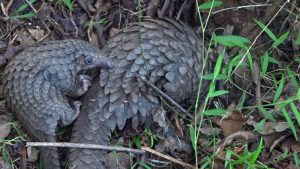
Pangolins in Kom-Wum Forest Reserve @ Chefor Fotang
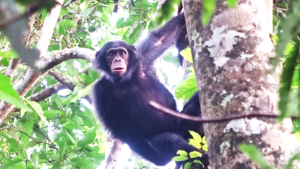
A chimpanzee in Kom-Wum Forest Reserve@ Chefor Fotang
Our Research and Conservation Projects
PRACOND builds on biodiversity research and community-based conservation initiatives undertaken by its members in the Kom-Wum Forest Reserve since 2018. Since its establishment in 2022, PRACOND has continued to promote biodiversity conservation, scientific research and sustainable community development, building on earlier initiatives supported by the Rufford Foundation, the International Foundation for Science (IFS) and Idea Wild.
The following completed projects reflect the scientific research and community-based conservation activities that contribute to the broader conservation objectives of KOMCHIMPANGO.
Completed Research and Conservation Projects in Kom-Wum Forest Reserve
1. NICAMNOR Chimpanzee Project (2018)
This project contributed to research and conservation efforts targeting the Nigeria-Cameroon chimpanzee in the Kom-Wum Forest Reserve. It focused on improving knowledge of the species and supporting conservation initiatives aimed at protecting chimpanzees and their natural habitats.
Status: Completed
2. Ecology and Behaviour of the Nigeria-Cameroon Chimpanzee (2018)
This research investigated the ecology and behaviour of the Nigeria-Cameroon chimpanzee in the Kom-Wum Forest Reserve and Mbi Crater Kefem Landscape. It focused on estimating chimpanzee populations, investigating feeding ecology and habitat requirements, and documenting behavioural characteristics, including tool use.
The project contributed to scientific understanding of chimpanzee ecology and provided information relevant to conservation planning and habitat protection.
Funding: Rufford Foundation, with supplementary funding from the International Foundation for Science (IFS) to cover research activities not supported by the original Rufford grant.
Rufford Grant Reference: 24025-1
Status: Completed
3. Human-Chimpanzee Interactions and Habitat Suitability of the Nigeria-Cameroon Chimpanzee (2019–2020)
This project investigated interactions between local communities and chimpanzees and assessed habitat suitability within the Kom-Wum Forest Reserve. The research examined human-induced threats, mapped suitable chimpanzee habitats and investigated environmental factors influencing chimpanzee nest-site selection.
The findings provided scientific information to support habitat conservation, reduce human pressure on chimpanzee populations and guide conservation management.
Funding: Rufford Foundation
Rufford Grant Reference: 28868-2
Status: Completed
4. Fruit Availability and Dietary Ecology of the Nigeria-Cameroon Chimpanzee (2021–2023)
This project investigated fruit availability and the dietary ecology of the Nigeria-Cameroon chimpanzee in the Kom-Wum Forest Reserve. It examined seasonal variation in fruit production, chimpanzee dietary composition and food preferences to improve understanding of the relationship between food availability, feeding behaviour and habitat use.
The research generated scientific information relevant to protecting important chimpanzee food resources, conserving suitable habitats and promoting sustainable forest management.
Funding: Rufford Foundation
Rufford Grant Reference: 32006-B
Status: Completed
5. Plant Diversity, Ant Availability and Conservation Status of Wild Nigeria-Cameroon Chimpanzees in Kom-Wum Forest Reserve, North-West Region, Cameroon (2023–2024)
PRACOND conducted this research project in collaboration with the Centre for Indigenous Resources Management and Development (CIRMAD), with funding exclusively from the International Foundation for Science (IFS). The grant was approved in 2022, and research activities were implemented between 2023 and 2024.
The project investigated plant diversity, ant availability and the conservation status of wild Nigeria-Cameroon chimpanzees in the Kom-Wum Forest Reserve. It examined important ecological resources, including plant species and ants, to improve understanding of chimpanzee food availability, habitat requirements and conservation needs.
The research contributed to scientific knowledge of chimpanzee ecology and provided information to support biodiversity conservation, sustainable habitat management and the long-term protection of the Nigeria-Cameroon chimpanzee.
Funding: International Foundation for Science (IFS)
IFS Grant Agreement Number: I-1-D-6158-2
Grant Approval: 2022
Collaborating Institution: Centre for Indigenous Resources Management and Development (CIRMAD), Bamenda, Cameroon
Status: Completed
6. Strengthening Chimpanzee Conservation through Law Enforcement, Livelihood Improvement and Conservation Education (2023–2024)
This project strengthened the conservation of the Endangered Nigeria-Cameroon chimpanzee and other threatened wildlife in the Kom-Wum Forest Reserve through an integrated, community-based conservation approach.
The project combined anti-poaching patrols, wildlife monitoring, alternative livelihood development and environmental education to address major conservation threats, including illegal hunting, bushmeat consumption and habitat degradation.
By engaging local communities in conservation activities and supporting sustainable livelihoods such as beekeeping and piggery, the project helped reduce dependence on forest resources, strengthen community participation in biodiversity conservation and promote the long-term protection of threatened wildlife and their habitats.
Funding: Rufford Foundation
Rufford Grant Reference: 39926-D
Status: Completed
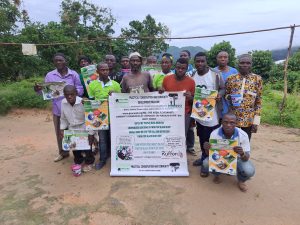
Raising Biodiversity Conservation Awareness Among Local Communities Surrounding the Kom-Wum Forest Reserve
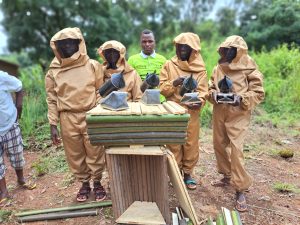
Conducting Beekeeping Training Workshops for Farmers and Hunters in Communities Surrounding the Kom-Wum Forest Reserve
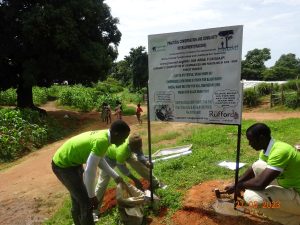
Installing Conservation Awareness Signboards in Communities Surrounding the Kom-Wum Forest Reserve
Who We Are
Our Team
What We Do
How We Work
Activities in Pictures